Written By: Aelan Snyder ’28
A criminal trial is a painstakingly long process for all parties involved. The process becomes even more drawn out when a mistrial is declared at the end of a trial and the prosecution chooses to retry the case. Now a defendant must go through pre-trial motions, scheduling a trial, jury-selection and the trial itself, not once but twice, to obtain proper conviction and sentencing. For instance, the entire legal process from arrest to final verdict in an average murder trial typically spans one to three years.[1] This anxiety-inducing delay can occur while the accused remains in jail for months or even years, comforted only by the adage “presumed innocent”.
Constitutional vs. Statutory
To combat unnecessary or prejudicial delay in the justice system, defendants have a constitutional right to a speedy trial, guaranteed by the Sixth Amendment and imposed on the states by the Due Process Clause of the Fourteenth Amendment.[2] Since there is no constitutional basis for quantifying the speedy trial right into a certain number of days, the defendant’s constitutional right is supplemented by statutory protections.[3] For example, the Virginia Code mandates that a trial must be commenced within five months of a finding of felony probable cause for defendants that are “held continuously in custody thereafter”, or within nine months for defendants not in custody.[4] If the defendant is not tried for such offense within those time constraints, then the prosecution is permanently barred from prosecuting the defendant for that offense.[5]
Statutory speedy trial clocks vary following a mistrial. The majority of states and the federal system reset the clock with a fixed number of days to limit the amount of time the government has to bring a retrial.[6] However, in Virginia, so long as the commencement of the first trial is timely, the courts find the statutory mandate for speedy trial satisfied for all subsequent retrials.[7] The courts’ rationale for this interpretation comes from the language of the statute itself,[8] which says that Code § 19.2-243 becomes effective if “no trial is commenced” within the specified time constraint.[9] This is done under the presumption that the initial trial was commenced in a timely manner and that any retrial following a mistrial, on the same indictment, is merely an extension of the same proceeding.[10] Thus, the courts do not require a new speedy trial time frame.[11]
How Failing to Restart the Clock is Bad for Justice
While extra time may allow more time for strategizing and planning, it can also significantly prejudice the defense.[12] The Supreme Court held determined that prejudice to the defendant should be assessed with regard to the three interests that a speedy trial right is intended to protect: “(i) to prevent oppressive pretrial incarceration; (ii) to minimize anxiety and concern of the accused; and (iii) to limit the possibility that the defense will be impaired”.[13]
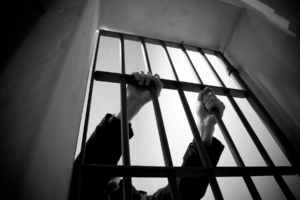
In practice, the failure to restart the statutory speedy trial clock results in a lack of urgency on the prosecution to schedule the retrial while an incarcerated defendant remains behind bars without having been convicted of a crime. The time a person spends in remand awaiting an outcome of their case is referred to as dead time.[14] Dead time has many negative impacts on the individual; more than just restricting the defendant’s movement and limiting freedom, the time spent in jail can have severe effects on a defendant’s mental health.[15] The accused is isolated from family and comfort, forced into a waiting game for an indeterminate amount of time, all whilst in an environment that measures life wholly by a calendar yardstick: days, months, and years.[16]
Arguably, the most damaging impact of failing to restart the statutory speedy trial clock is the possibility that the defense will be impaired with the passage of time.[17] The Supreme Court deems the impairment of the defense the most serious of the three sources of prejudice as the “inability of a defendant to adequately prepare [their] case skews the fairness of the entire system”.[18] With every continuance and every month that passes before the retrial, the risk increases that witnesses will die, disappear, or fail to remember events accurately.[19] Additionally, if the accused is incarcerated during the delay, that severely hinders his ability to prepare his defense by gathering evidence, conducting legal research, or contacting his attorney and witnesses.[20] Due to these factors and others, the failure to commence a prompt and speedy retrial severely undermines the fairness of the justice system.[21]
Regarding the societal impacts of dead time, allowing a defendant to sit in jail contributes to overcrowding and the crises of inhumane and dangerous living conditions.[22] More than 400,000 people in the United States are currently being detained pretrial, forced to suffer through dead time.[23] Accused innocents are thrown into “crime breeding institutions”, mixed in with convicted offenders, some of whom are “hardened recidivists”.[24] Exposing a defendant to these conditions for an extended period of time “has a destructive effect on human character…”[25] Why risk destroying the character of a human being who quite possibly has not done the acts of which they are being accused?
Potential Solutions
When dealing with the possible conviction of a human being and seeking justice for a victim, sometimes extra time is necessary. However, statutorily allowing an unlimited amount of time to commence a retrial is too long of a leash. For instance, in New York, the prosecution has six months from the commencement of the criminal action to declare themselves ready for trial where the defendant is accused of at least one felony, and the same statutorily prescribed time applies after a mistrial.[26] Virginia state law should either mandate that the statutory speedy trial clock restarts following a mistrial, or at the very least, specify a certain number of days or months in which the prosecution must commence a retrial. By codifying a strict time limit, the state can more appropriately protect a defendant’s fundamental right to speedy trial and better preserve the equity of the justice system.
[1] Terance D. Miethe, Estimates of Time Spent in Capital and Non-Capital Murder Cases: A Statistical Analysis of Survey Data from Clark County Defense Attorneys 9-10 (Dep’t of Crim. Just., Univ. of Nev., Las Vegas, Feb. 21, 2012), https://files.deathpenaltyinfo.org/legacy/ClarkNVCostReport.pdf.
[2] U.S. Const. amend. VI; Klopfer v. North Carolina, 386 U.S. 213 (1967).
[3] Barker v. Wingo, 407 U.S. 514, 523 (1972); Betterman v. Montana, 578 U.S. 437, 447 (2016).
[4] Va. Code Ann. § 19.2-243 (2025).
[5] Id.
[6] 18 U.S.C.A. § 3161(e) (West); See Betterman, 578 U.S. at 445 (citing “numerous state analogs” to the federal Speedy Trial Act of 1974).
[7] Fisher v. Commonwealth, 497 S.E.2d 162, 164 (Va. Ct. App. 1998); Va. Code Ann. § 19.2-243 (2025).
[8] Va. Code Ann. § 19.2-243 (2025).
[9] Morgan v. Commonwealth, 453 S.E.2d 914, 915 (Va. Ct. App. 1995); Va. Code Ann. § 19.2-243 (2025).
[10] Morgan, 453 S.E.2d at 915.
[11] Id.
[12] Barker, 407 U.S. at 531-32.
[13] Id. at 532.
[14] Daisha New, Dead Time in America: An Evaluation of the Early Stages of Judicial Processing (2018) (Johns Hopkins University), https://jscholarship.library.jhu.edu/items/8f6fdad9-31cc-4218-92a6-ab6758e320a9.
[15] See Barker, 407 U.S. at 532-33.
[16] Id.
[17] See Barker, 407 U.S. at 531-32.
[18] Barker, 407 U.S. at 532.
[19] Id.
[20] Id. at 533.
[21] See Barker, 407 U.S. 514.
[22] Barker, 407 U.S. at 520 (citing Nat’l Comm’n on the Causes & Prevention of Violence, To Establish Justice, to Insure Domestic Tranquility: Final Report 152 (U.S. Gov’t Printing Off. 1969).
[23] Prison Pol’y Initiative, Pretrial Detention, https://www.prisonpolicy.org/research/pretrial_detention/.
[24] Nat’l Comm’n on the Causes & Prevention of Violence, To Establish Justice, to Insure Domestic Tranquility: Final Report 152 (U.S. Gov’t Printing Off. 1969), https://www.ojp.gov/pdffiles1/Digitization/275NCJRS.pdf.
[25] Testimony of James V. Bennett, Director, Bureau of Prisons, Hearings on Federal Bail Procedures Before the Subcomm. on Constitutional Rights & the Subcomm. on Improvements in Judicial Machinery of the S. Comm. on the Judiciary, 88th Cong., 2d Sess. 46 (1964).
[26] N.Y. Crim. Proc. Law § 30.30 (McKinney 2025); People v. Merrihew, 755 N.Y.S.2d 462 (App. Div. 2003).